What is Plywood, Structure, Advantages, Disadvantages and Applications
Plywood is a popular construction material with many outstanding advantages. Learn about the structure, types of plywood, advantages and disadvantages and its practical applications in life.
Written by
Woodland
News
Application News
Woodland
Application News
Plywood is a popular construction material with many outstanding advantages. Learn about the structure, types of plywood, advantages and disadvantages and its practical applications in life.
What is Plywood, Structure, Advantages and Disadvantages and Applications
What is Plywood?
Definition and structure of Plywood
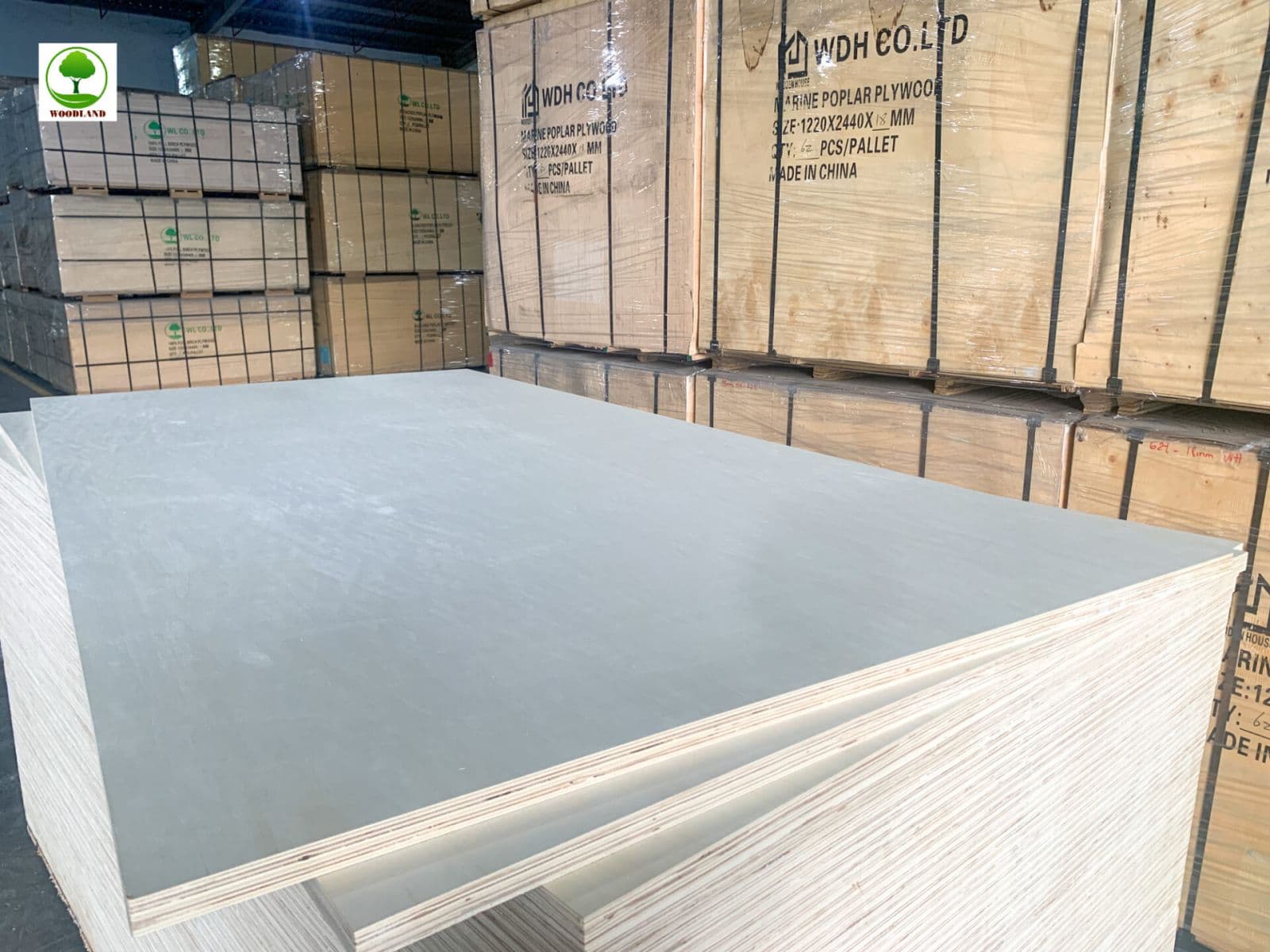
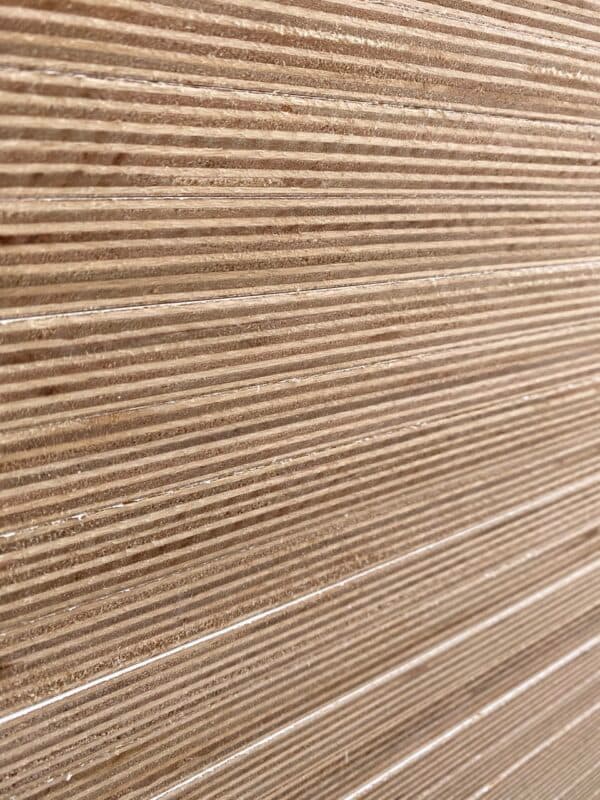
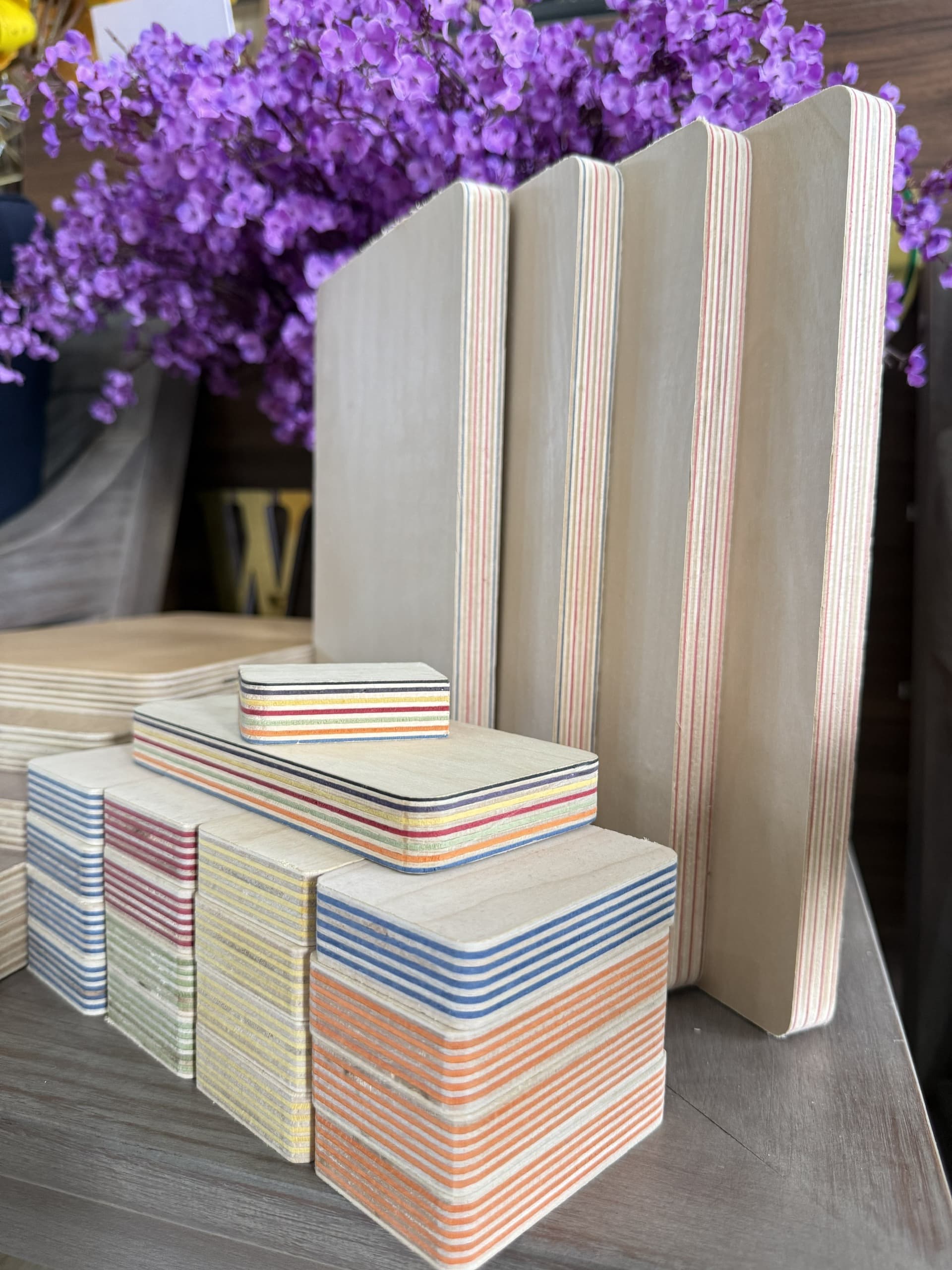
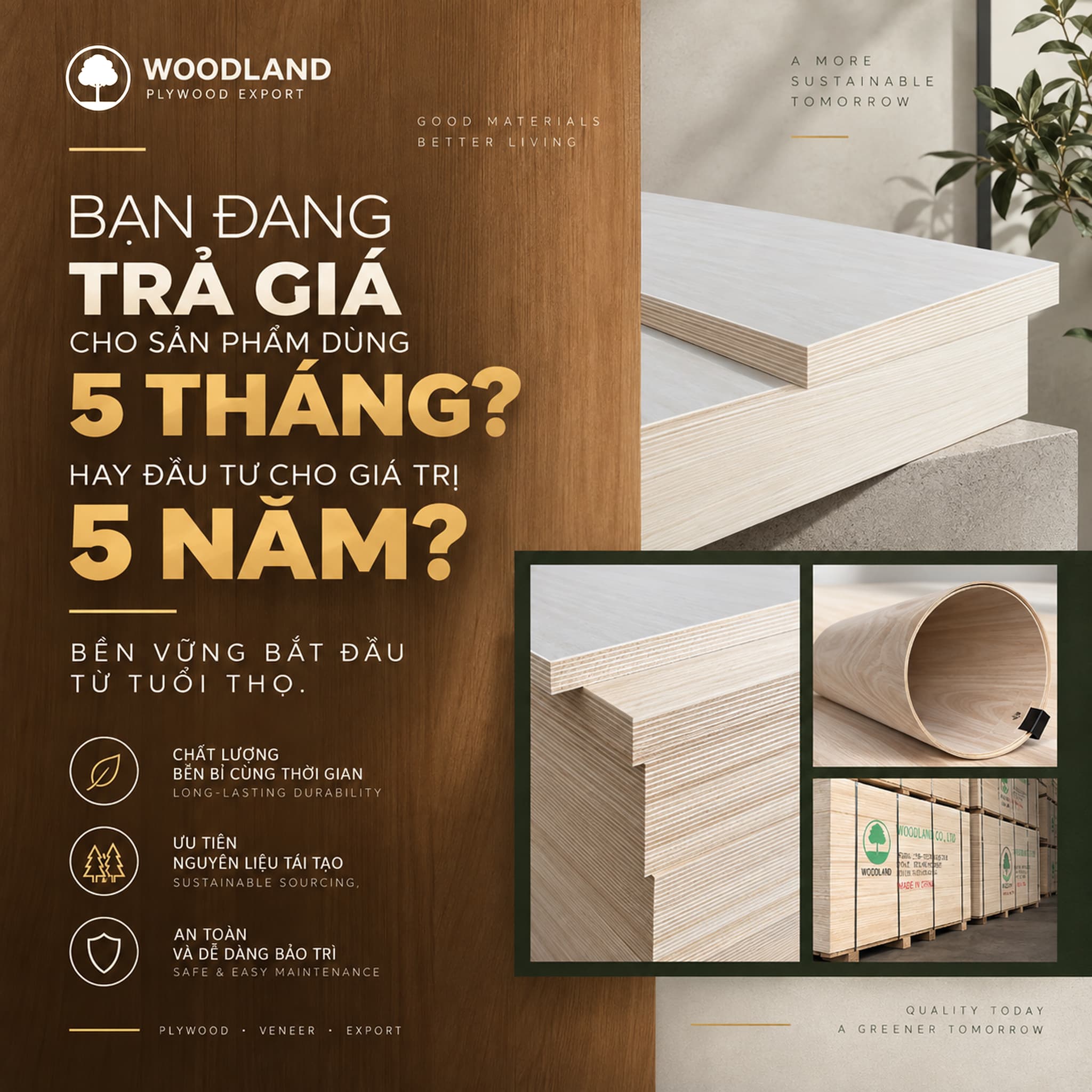
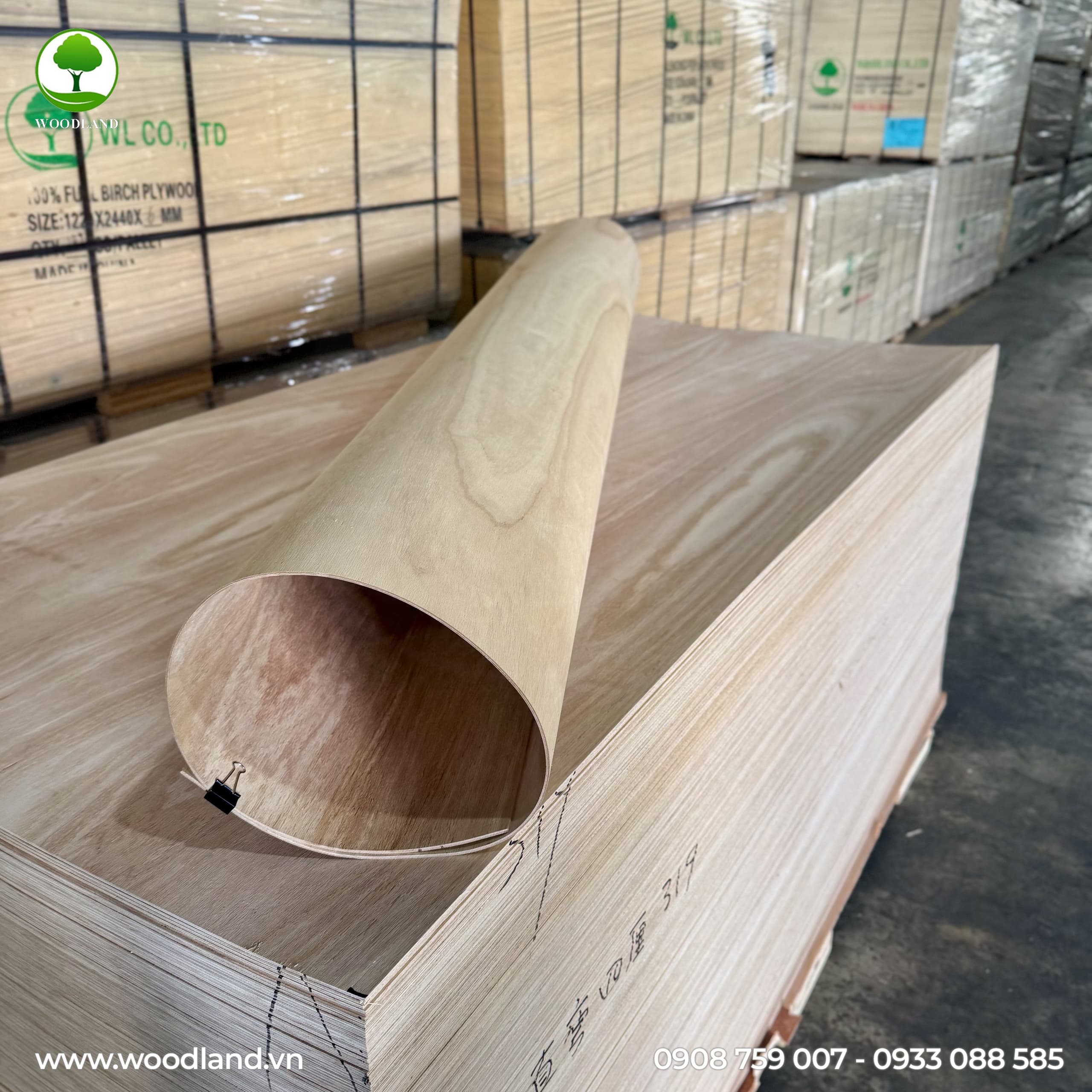
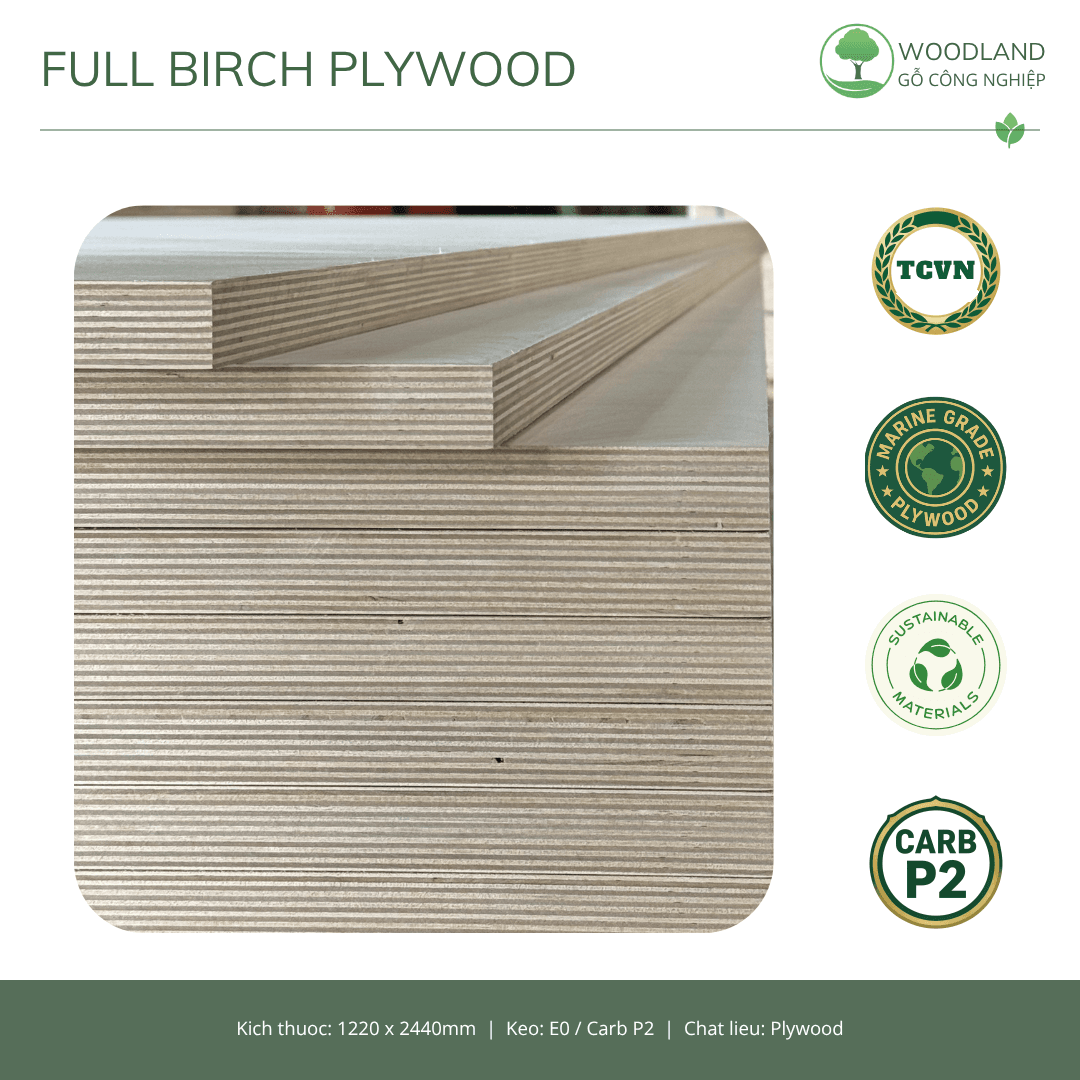
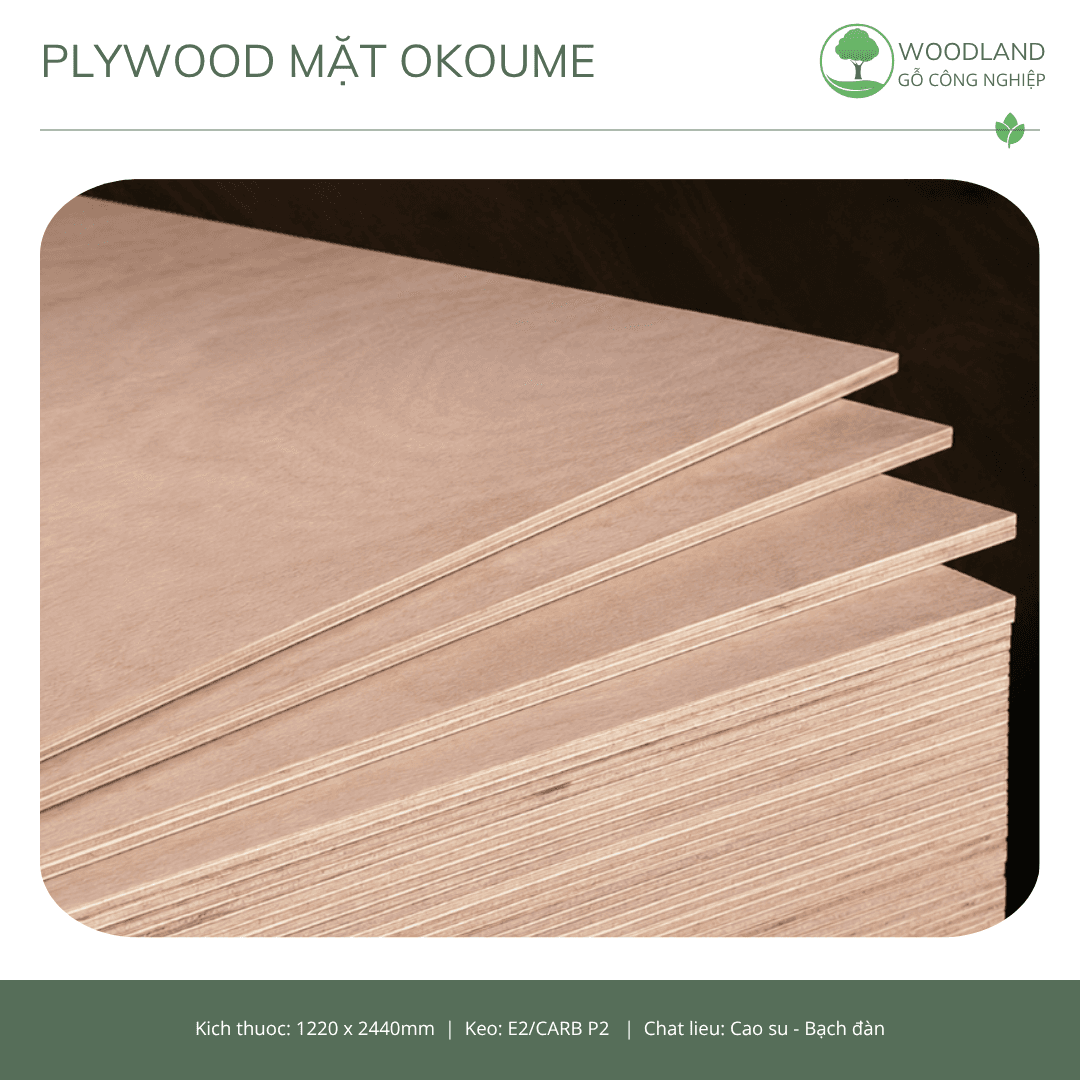
Plywood, also known as plywood, is a sheet material made up of many thin layers of wood (usually called veneer) glued overlap. These veneer layers are glued with specialized glue under the influence of heat and high pressure. A special feature is that the veneer layers are often placed perpendicular or diagonal to each other. This layout helps increase durability, minimize warping and shrinkage of the board.
The basic structure of plywood includes:
Veneer (veneer layer): These are thin layers of wood sliced from natural wood trunks.
Glue: The type of glue used has a great influence on the quality and moisture resistance of plywood. .
Surface coating (optional):Some types of plywood are coated with veneer, melamine or laminate to increase aesthetics and scratch resistance.
Popular types of Plywood
On the market today there are many different types of plywood, classified based on many factors such as:
Type of Woodalnd wood to choose: Plywood can made from hardwood such as birch wood, eucalyptus wood, poplar wood, rosewood, rubber,...
Type of glue: Melamine glue (MUF) and Carb P2 are often used for water-resistant plywood, suitable for interior applications.
Veneer layer: Veneer affects the thickness and durability of plywood, Veneer is coated thickly and smoothly. membrane
Quality standards: Plywood is classified according to different standards such as, Carb P2, TCVN, ISO, FSC,...
Some popular types of plywood include:
Water-resistant Plywood (Marine Plywood): Use PF glue and wood with good water resistance, suitable for outdoor applications or humid environments wet.
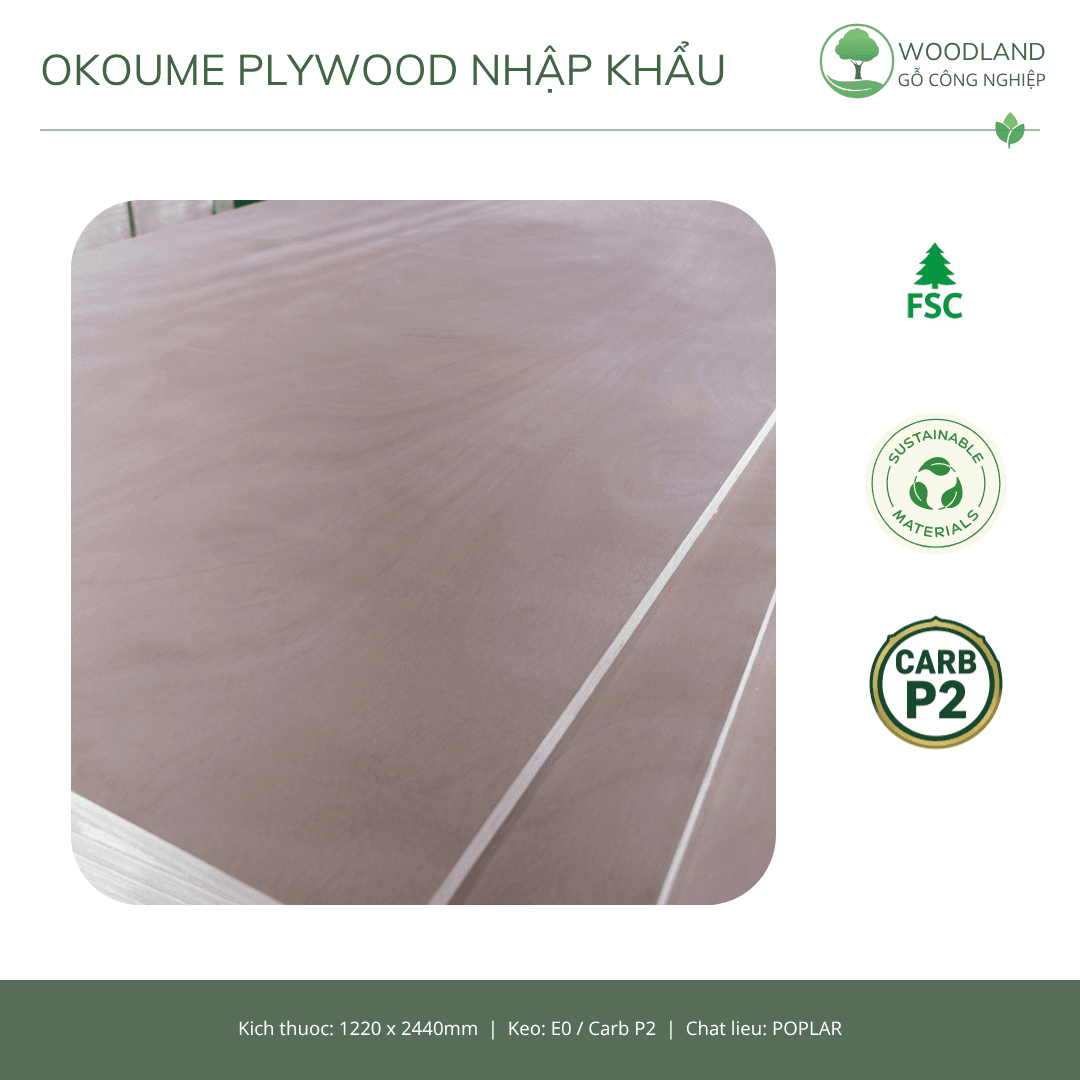
Plywood Poplar:The surface is glued with natural Poplar wood veneer, increasing aesthetics.
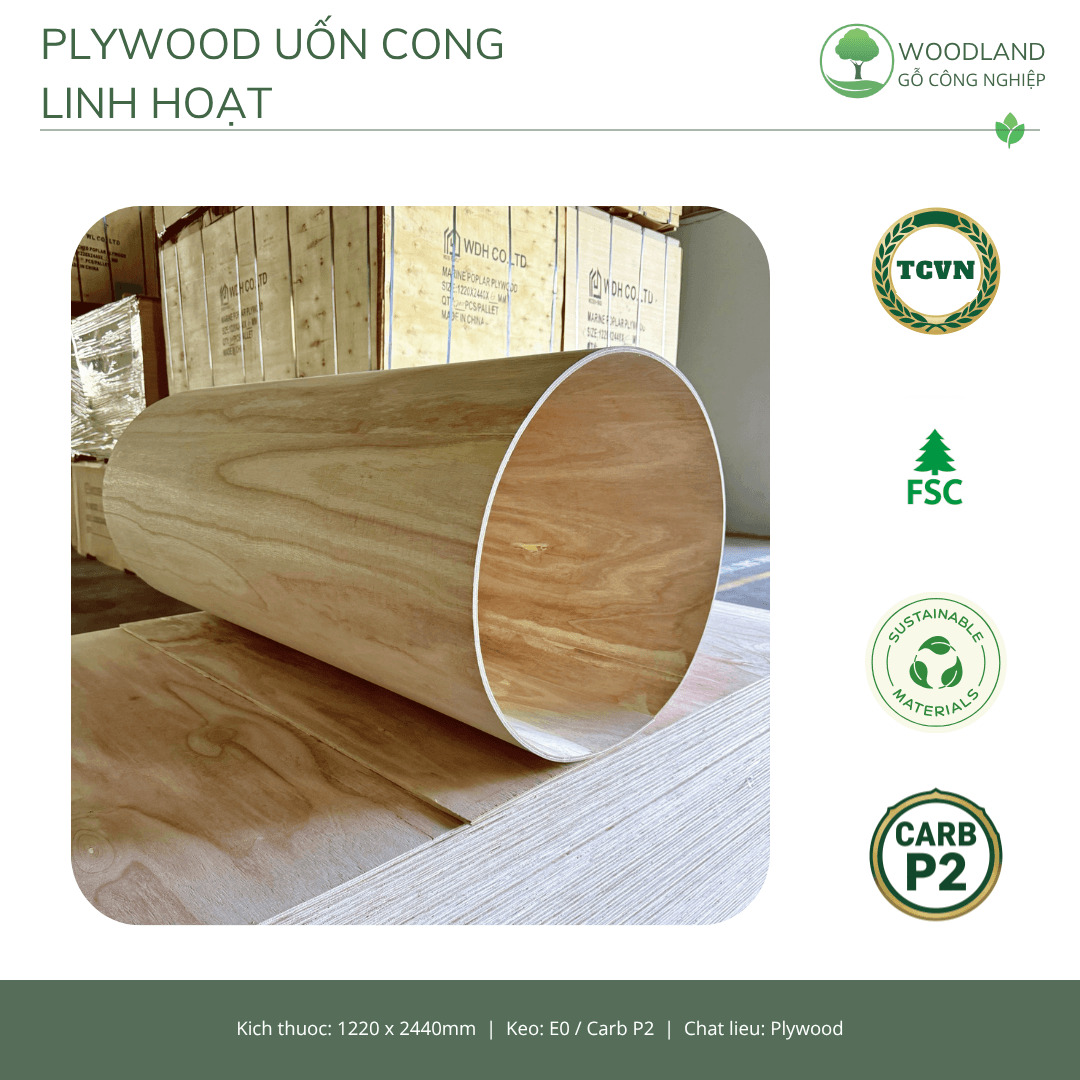
Bent Plywood: Used in the design of products or interiors with rounded corners.
Advantages of Plywood
High durability and bearing capacity
Thanks to the multi-layer structure with veneer layers glued perpendicularly or perpendicularly. diagonally, plywood has higher durability and bearing capacity than solid natural wood. This structure helps disperse impact forces, minimizing the risk of cracking.
Flexibility and ease of processing
Plywood can be easily cut, drilled, planed, sanded and bent, making processing and installation simpler. This helps save time and construction costs.
Less warping and shrinkage
Unlike natural wood, plywood is less susceptible to warping and shrinkage due to changes in humidity and temperature. This helps products made from plywood maintain a stable shape and size for a long time.
Disadvantages of Plywood
Limited moisture resistance in some types
Not all types of plywood have good moisture resistance. Plywood pressed with UF glue often has less moisture resistance than water-resistant plywood using Melamine glue for furniture. Therefore, it is necessary to choose the type of plywood suitable for the usage environment.
Diverse applications of Plywood in life
In construction and furniture
Plywood is widely used in construction and furniture, including:
Making floors, partitions, ceilings.
Making doors, cabinets, tables and chairs.
Making concrete molds.
Making objects wall cladding and decorative materials.
In the production of household appliances
Plywood is also used to produce many types of household items, such as:
Book shelves, shelves.
Storage boxes.
Children's toys.
Speaker boxes.
In other industries
In addition to construction and furniture, plywood is also used in many Other industries, including:
Automotive industry (making partitions, vehicle floors).
Shipbuilding industry (making partitions, decks).
Packaging industry (making cartons, containers).
Thanks to its outstanding advantages, plywood is increasingly widely used and has become an indispensable material in many areas of life.
Division share:
Related news
Is Plywood Considered " Living Materials " ?
Is Plywood Considered " Living Materials " ?
Full Birch Color Plywood
Water Resistant Plywood for kitchen cabinets
Imported Melamine CARB P2 Plywood – 13 Latest Color Codes
Supply of Melamine Coated Plywood
Marine Plywood Standard – All you need to know
Plywood for exposed edge furniture
Marine Plywood:The Complete Guide