Understand clearly about grafted rubber wood and how to join tenons
Discover the leading Rubberwood production technology. The article delves into the Finger Joint and Edge-glued techniques, the role of AICA glue, and helps you choose quality rubber boards for modern interiors.
Written by
Woodland
News
Application News
Woodland
Application News
Discover the leading technology for producing rubber wood. The article delves into the Finger Joint and Edge-glued techniques, the role of AICA glue, helping you choose quality rubber boards for modern interiors.
In the trend of modern interior architecture, materials not only need to be beautiful but also sustainable and technically optimal. Composite rubber wood has quickly become one of the most popular materials, gradually replacing solid natural wood thanks to outstanding improvements in the production process.
But what creates the outstanding stability and durability of this material? The answer lies in advanced tenon joining techniques, especially serrated tenon joining (Finger Joint) and the support of specialized glue.
This article will provide a comprehensive view, from definition, classification to core technology, helping readers and designers understand the true value of high-quality jointed rubber boards.
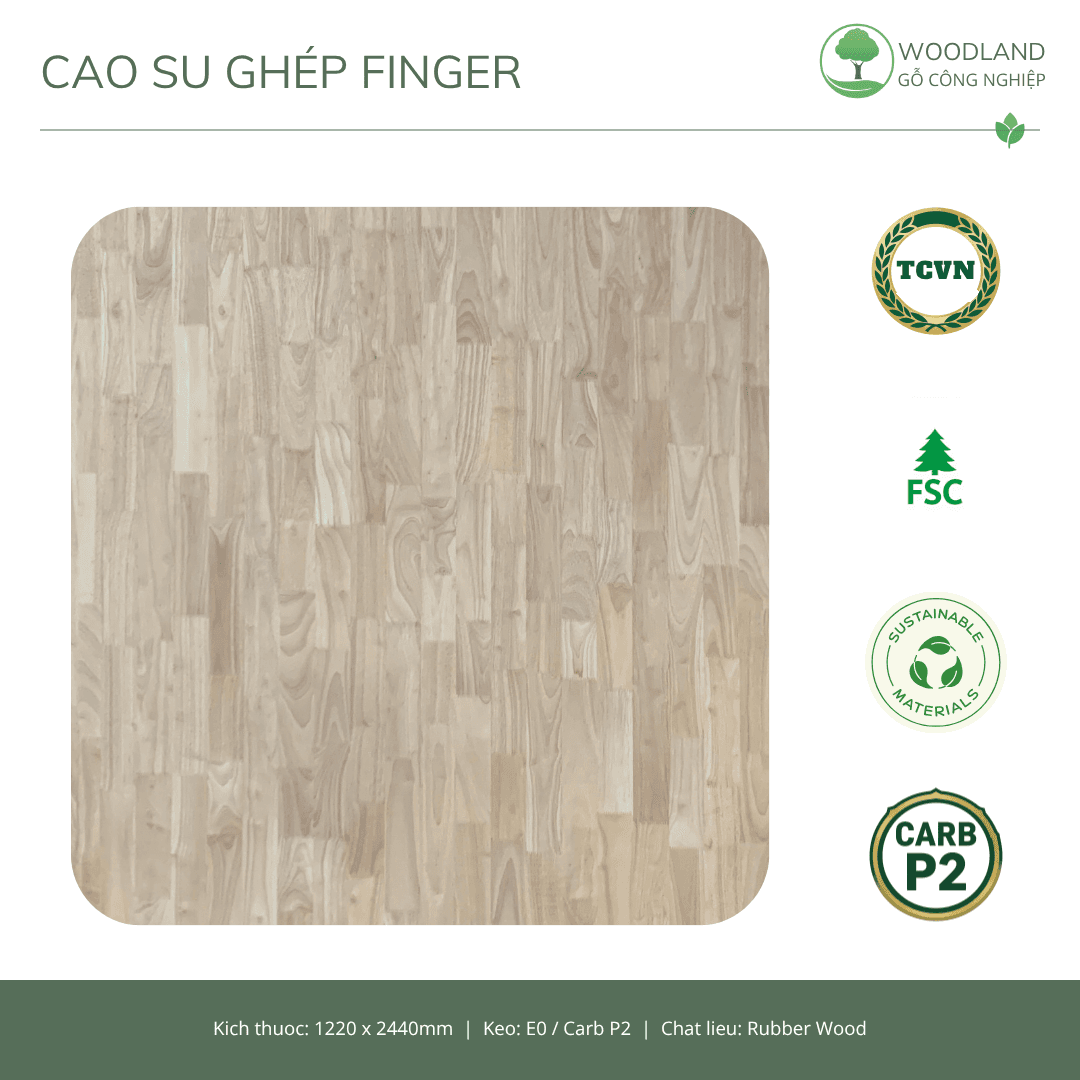
Joined rubber wood: Definition and role in modern furniture
High quality wood Grafted rubber is a product produced from planted rubber wood, a sustainable resource, through rigorous industrial processing. This is not only an economic solution but also an environmentally friendly choice, playing a key role in the modern furniture manufacturing industry.
The nature of rubber wood (Rubberwood): From raw materials to finished products
Rubberwood (Rubberwood) is harvested after the tree has completed its latex cycle (usually after 25 - 30 years). This is a type of wood with medium density, straight grain, natural light color, very suitable for processing into industrial boards.
The process of creating composite rubber wood includes complex technical steps to completely eliminate natural defects and increase durability:
Harvesting and Drying:The wood is dried to a standard moisture content (usually 8-12%) and impregnated with preservative chemicals to prevent termites and fungi. Mold.
Classification and Cutting of Bars: Wooden bars of standard sizes are carefully selected, knots and cracks are removed.
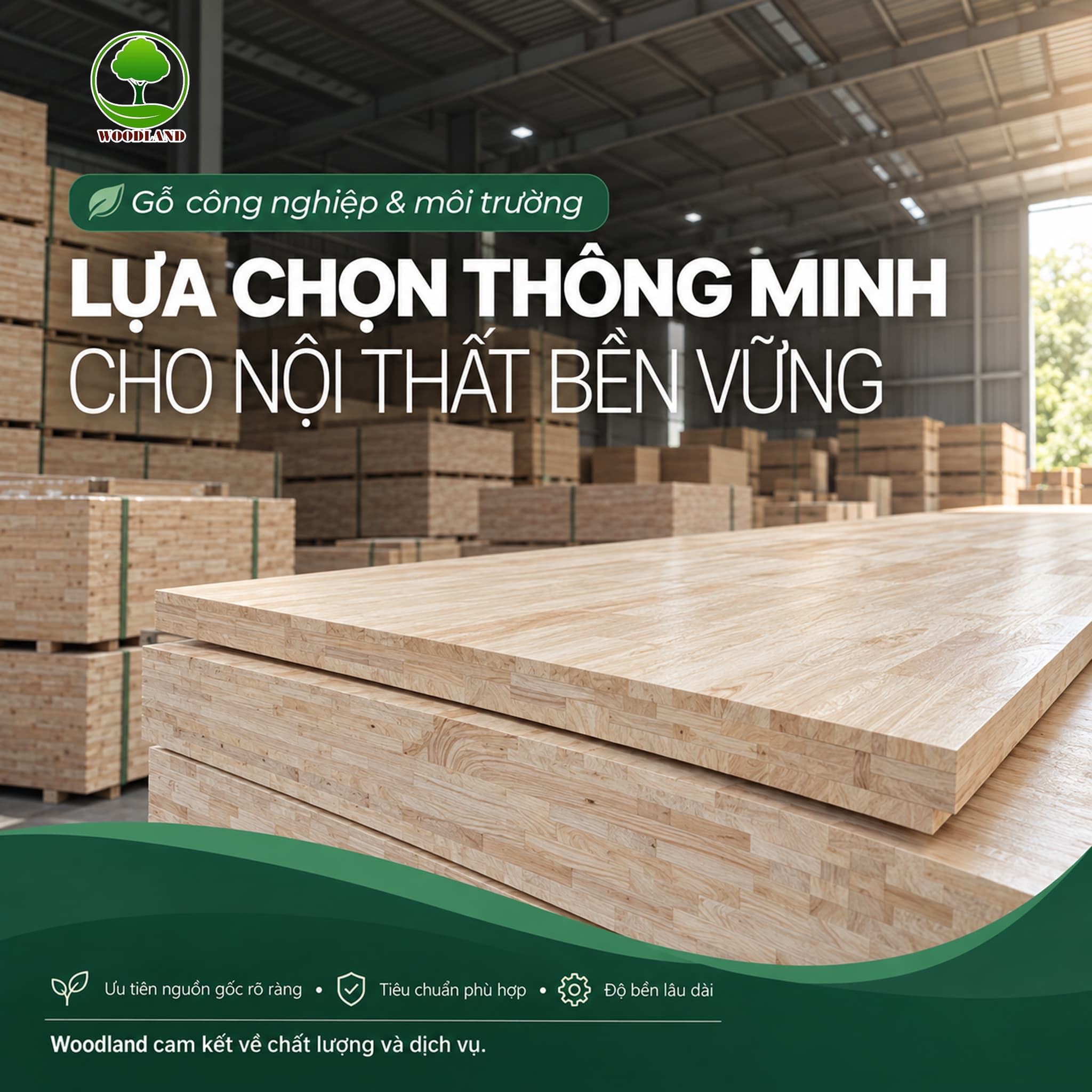
Bar Joining: Treated wooden bars are linked together using tenon joining techniques under high pressure and specialized glue to form large boards (joint rubber boards).
Basic Classification: Edge-glued and Finger Joint
In the production of composite rubber boards, there are two main joining methods that determine the structure and purpose of the board:
Edge-glued - Parallel joining:
Long wooden bars of the same size are joined in parallel (on the long side) to form a board with a large length and an almost seamless surface.
This type is often used called slatted rubber wood and has high aesthetics, suitable for making table tops and display shelves that require uniform wood grain.
Finger Joint - Serrated tenon joint:
Short wooden bars are cut into a serrated tenon shape (Finger Joint) at both ends, then joined together lengthwise to optimize material usage.
This method provides outstanding mechanical strength and load-bearing capacity. Compression and tension are much higher than conventional edge-glued, suitable for load-bearing applications.
Technical background: The difference of advanced tenon joining method
The difference in quality of grafted rubber wood is not only in the raw materials but also depends largely on tenon joining technology and glue quality. These are two core factors that ensure the stability and longevity of the product.
Finger Joint technique - The key to creating outstanding durability
The serrated joint technique (or end joint) is a smart technical solution, turning short pieces of wood into long, sturdy wooden bars. The characteristic serrated shape is a key factor in creating a solid mechanical bond:
Increasing the glued surface area: Thanks to the zigzag structure of the serrated tenon joint, the contact surface area between two wooden bars increases many times compared to a conventional flat joint. This optimizes the effectiveness of the glue.
Natural mechanical bond: The wooden tenons lock tightly together, creating a mechanical bond before the glue is completely dry, helping the joint better withstand pulling and bending forces.
Minimize defects: Finger joint technique allows wood defects (such as large knots, cracks, warping) to be removed before joining, ensuring the final product has quality. higher uniformity.
The role of specialized glue A